Measure the mission profile
Capture the load during start-up, acceleration, turns, payload handling and idle periods.
Jetray’s corporate website describes cell selection, BMS design, prototyping and custom pack services. Use this brief to discuss the scope and feasibility of your own project.
Battery references for robotics and mobile automation. Translate movement, standby and charging into a measurable duty cycle before choosing the pack architecture.
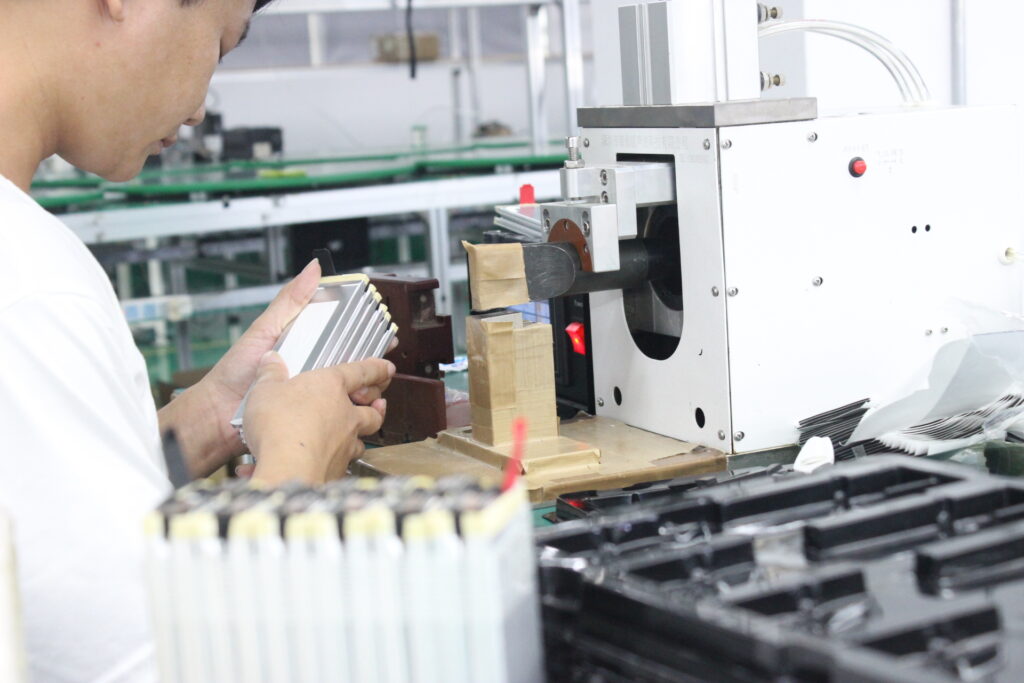
Photograph from the Jetray corporate factory page.
Capture the load during start-up, acceleration, turns, payload handling and idle periods.
Confirm voltage limits, BMS signals and the system response to protection events.
Evaluate charging opportunity, connector wear, temperature monitoring and the return-to-service criteria.
Nominal system voltage, allowable input window, continuous current, peak current and peak duration.
Available envelope, fixing points, weight constraints, cable routing, connector and polarity.
Charger model, charging opportunities, temperature sensing and required BMS or communication signals.
Intended use, target markets, sample quantities, forecast volume, required test evidence and revision controls.
Use these review gates to organize a project discussion with the supplier. The agreed scope and deliverables are confirmed for the individual project.
| Stage | Information to align | Decision to record |
|---|---|---|
| Requirements brief | Route-based duty cycle, acceleration peaks and idle demand; Payload, mounting, vibration conditions and service access | The equipment needs, mandatory limits and open questions. |
| Configuration review | Document the representative mission profile, controller interface and charging workflow for the exact robotic platform. | The proposed model or design scope, interface drawing and document revision. |
| Sample evaluation | Representative equipment, operating cycle and acceptance procedure. | Results, deviations and changes needed before the next stage. |
| Order preparation | The approved configuration, quantity, packaging and required shipment documents. | The purchase specification, acceptance method and agreed commercial terms. |
Share the load, dimensions and intended use. Ask for a current model specification and a project review.